
 Dr. Michael Kaye on Living to 110, Brain Training, and Building Healthier Habits
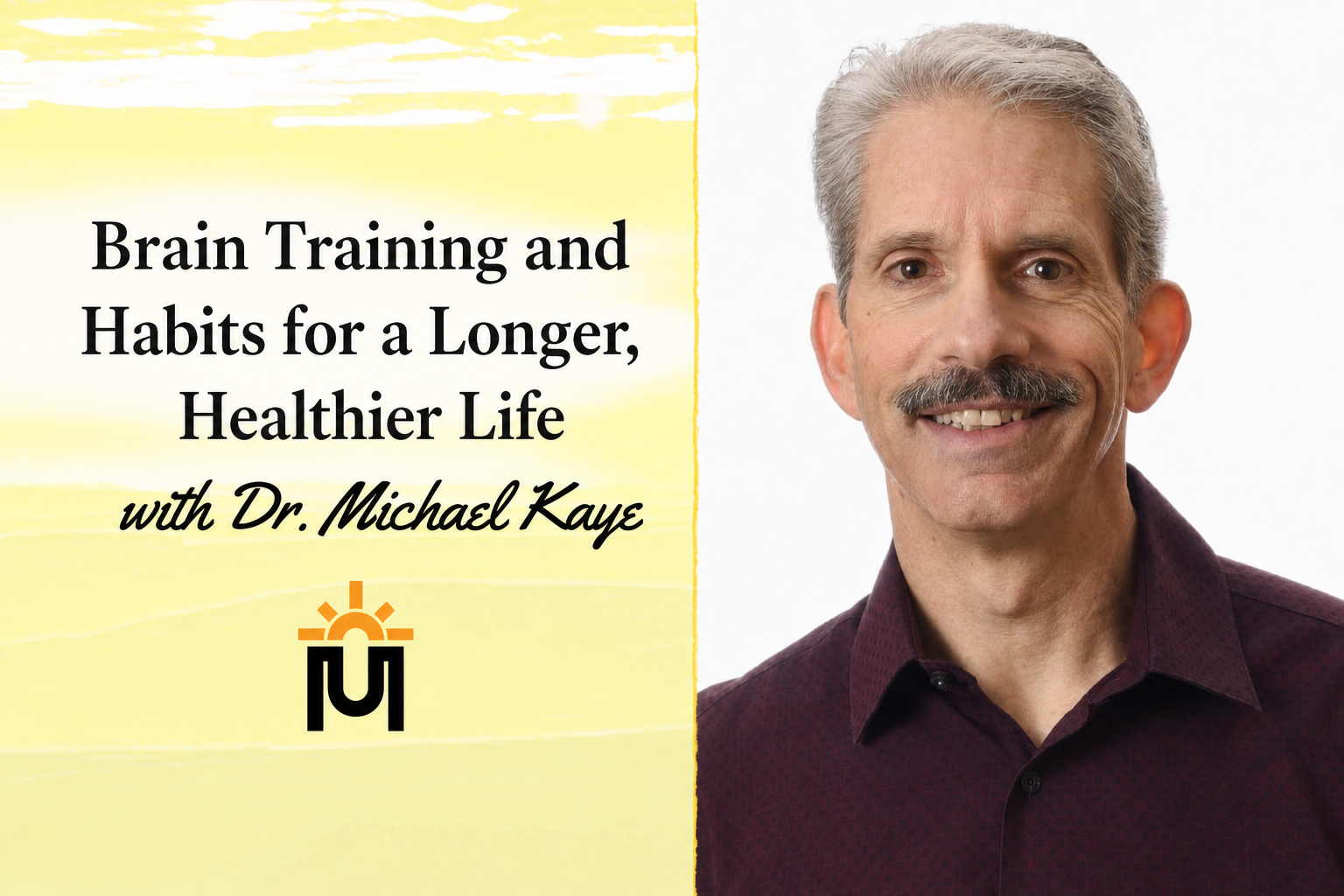
In this episode, I spoke with Dr. Michael Kaye, a chiropractor and certified functional medicine practitioner who founded The Center for Functional Health in Sellersville, Pennsylvania. Michael has been helping patients optimize their health for over 37 years, and his personal story is one you won’t forget.
Top Points in This Episode
- How Michael went from being an overweight kid in Philadelphia to a competitive bodybuilder and chiropractor, all inspired by Dr. Franco Columbu.
- Why he set a goal at age 23 to live to 110, and what longevity preparedness really means beyond just staying healthy.
- A simple brain exercise using your non-dominant hand that builds new neural pathways over 30 days.
- His morning workout routine and a coffee recipe designed to fuel your brain and body.
- How AI is changing healthcare, and why critical thinking still matters more than ever.
From Overweight Kid to Functional Medicine Practitioner
Michael grew up in Philadelphia where the food pyramid was soft pretzels, cheesesteaks, pizza, hoagies, and Tastykakes. By ninth grade, he was overweight and buying clothes at a store called EDCO with the tagline “For Husky Men and Boys.” That same year, someone introduced him to the work of Dr. Franco Columbu, a chiropractor who happened to be Arnold Schwarzenegger’s best friend.
That introduction changed everything. Michael started focusing on nutrition and weightlifting, eventually competing as a bodybuilder for three years. More importantly, it pointed him toward a career in chiropractic care. He watched his own family struggle with diabetes, heart disease, and autoimmune issues, and realized most of it was tied to lifestyle choices. When he tried to share what he was learning with his parents, they thought he had an eating disorder.
That experience shaped his mission: help people see the connection between what they eat, how they move, and how they feel. He’s now been practicing for 37 years.
Living to 110 and the Full Picture of Longevity
At a Mark Victor Hansen seminar years ago, Michael wrote down 100 goals in 20 minutes. One of them was living to 110. He still holds that goal today, along with working until age 80.
But he’s quick to point out that longevity is about more than just optimizing your bloodwork and keeping your mitochondria healthy. He recently finished writing an article on longevity preparedness, where he explores questions most people skip over: Do you have the finances to support a long life? Will your friends and family be around, or will you end up alone?
Loneliness, he says, is a real risk that doesn’t get enough attention in the longevity conversation. We’re supposedly more connected than ever through the internet, but people are lonelier now than at any point in history.
Michael’s Morning Routine
Michael works out five mornings a week: Tuesday, Thursday, Friday, Saturday, and Sunday. Mondays and Wednesdays he starts seeing patients at 7:30 a.m., so those are his non-workout mornings. His training includes kettlebells, weightlifting, and a heavy focus on mobility work for hips, knees, shoulders, and thoracic spine.
His morning coffee doubles as a health drink. He adds creatine, MCT oil, reishi mushrooms, and whey protein. It’s not sweet, but it’s designed to fuel his brain and body for long, physically demanding days.
For food, he leans keto and focuses on protein and fiber. Think eggs, turkey, bison, lamb, elk, and venison (patients who hunt share their game with him). He rarely touches starches and keeps a close eye on his hemoglobin A1C levels. He admits he’s pretty disciplined with his diet, but he does have a weakness for a good cannoli from South Philly.
Brain Training with Your Non-Dominant Hand
One of the most interesting habits Michael shared is eating and writing with his non-dominant hand. The idea is straightforward: by doing everyday tasks with the hand you don’t normally use, you force your brain to create new neural pathways.
He recommends picking a paragraph from a book or magazine and writing it out with your non-dominant hand every day for 30 days. By the end, you’ll see real improvement in your handwriting, and that improvement reflects actual changes happening in your brain. Just like you wouldn’t question that lifting weights makes your muscles stronger, the same principle applies to your brain when you challenge it with new tasks.
He also still writes by hand regularly, pointing out that the physical act of writing with a pen activates a different connection in your brain than typing does.
Phones, Screen Time, and Winding Down
Michael tries to get patients to go at least 60 minutes without screen time before bed. He says that getting someone off their phone is now harder than getting them off sugar, and he’s not wrong.
We also talked about the phone ban in New Jersey schools, which just passed as a state law. Michael sees it as a positive step. He’s noticed that people of all ages, not just young people, have lost the ability to properly communicate because they’re always scrolling.
For winding down at night, he recommends creating a bedtime routine similar to what we’d do for kids: stretching, journaling, mobilization work, or just calming the system down before getting into bed. He also mentioned the Hatch clock, which mimics a sunrise in your bedroom so you wake up gradually instead of in a fight-or-flight response from a blaring alarm.
AI in Healthcare and Why Critical Thinking Still Matters
Michael currently uses AI for virtual visits. His software records the conversation and generates the treatment note, which frees him up to focus entirely on the patient.
He shared a useful tip: after any call or meeting, ask your AI tool, “What questions did I miss?” or “What should I have asked?” It’s a simple habit that helps you catch blind spots.
He also referred to one of his patients calling AI “Almost Intelligent,” and thought that was spot on. Not everything AI produces is exact, and someone still needs to verify the output.
That led us into a bigger conversation about critical thinking. If we keep asking AI to think for us, what happens to our own ability to reason? Michael’s answer ties right back to personal growth: we have to keep doing hard things. AI won’t lift the kettlebell for you, and it won’t have the difficult conversations with your family. The tool is helpful, but the work still falls on us.
Biggest Challenge
Michael’s biggest challenge right now is scaling his practice while avoiding burnout. He works until around 10 p.m. most weeknights and is always available to his patients through their portal. He’s also exploring how to shift from an insurance-based model to a cash-based practice, which he believes would take a lot of stress off the table.
He also reflected on getting through COVID, when he took just one week off before going back to see patients. It was tough both emotionally and financially, but he pushed through it with the support of loyal patients and referral partners.
Connect with Dr. Michael Kaye
Visit The Center for Functional Health to learn more about Michael’s practice and his approach to functional medicine.