
 Book Summary Review: Daily Rituals: How Artists Work

Overview of the Book
Daily Rituals: How Artists Work by Mason Currey is a fascinating exploration of the daily habits, routines, and working methods of various creative people. The book features mathematicians, scientists, philosophers, painters, playwrights, poets, and novelists, all of whom navigated different self-imposed or unavoidable daily challenges in their efforts to do meaningful work.
Rather than presenting a traditional self-help formula or productivity system, Currey gives readers a concise look at how these individuals actually spent their days. The short biographical sketches focus on how people managed the challenges of producing meaningful work while dealing with the ordinary difficulties of daily life.
The central theme of Daily Rituals: How Artists Work is that there is no single ideal routine for creative success. Each person must learn how to cope with their own environment and challenges in order to accomplish three main things: overcome distractions, manage energy levels, and consistently produce work despite obstacles.
A Look Into the Lives of Creative Minds
Currey is especially interested in the daily activities and habits of 161 creative minds. To reconstruct their working lives and routines, he gathers information from letters, journals, interviews, memoirs, and biographies. Some of the figures featured in the book include Franz Kafka and Charles Dickens.
For example, Franz Kafka faced several challenges related to his day job and living situation. In a 1912 letter to Felice Bauer, Kafka described the obstacles he was dealing with, writing, “Time is short, my strength is limited, the office is a horror, the apartment is noisy, and if a pleasant, straightforward life is not possible, then one must try to wriggle by subtle maneuvers.”
This shows how Kafka had to find ways to work around the limitations in his life. His experience demonstrates that creativity is not always connected to sudden inspiration. Instead, creativity often depends on building the right conditions that make meaningful work possible.

Routine as a Foundation for Creative Work
Building on the importance of routine, Currey uses many examples to show how creative people handled daily challenges. One common trait among many of the people featured in the book is that they treated their creative work like a job. Instead of waiting to feel inspired, they committed themselves to their work through regular schedules, dedicated hours, and discipline.
For instance, Anthony Trollope made it a priority to write three thousand words every morning for thirty-three years. What made Trollope unique was his discipline and consistency. He wrote approximately 250 words every fifteen minutes during a three-hour writing session before leaving for his postal service job.
Another example is George Gershwin’s brother, Ira Gershwin. Ira followed a work schedule that often ran from late morning until midnight. He sometimes composed at the piano while wearing slippers, a bathrobe, and pajamas. His routine shows another form of dedication and discipline, even though it looked very different from Trollope’s morning structure.
The Diversity of Daily Rituals
The story of Ira Gershwin not only shows the discipline of creative people, but also reveals the wide variety of routines they followed. While Trollope thrived in the morning, others preferred working late at night when the world was quiet.
Some artists followed strict schedules, while others embraced disorder and unpredictability. Figures such as Charles Darwin, Anne Rice, William Faulkner, John Updike, and Igor Stravinsky each had unique habits and preferences that shaped their creative process. Some needed quiet. Others had unusual methods for overcoming creative blocks. These examples show that creative routines are deeply personal and often depend on the individual.
Showing Up Instead of Waiting for Inspiration
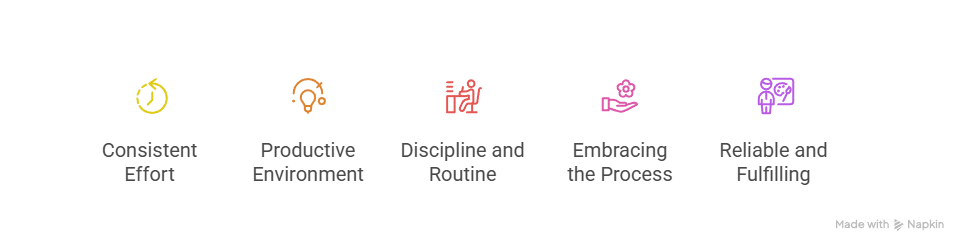
Many of the artists in Daily Rituals did not rely only on inspiration. They treated art as their job. Some got up early, while others worked late into the night, but the important point is that they showed up consistently.
Chuck Close captured this idea well when he said, “Inspiration is for amateurs. The rest of us just show up and get to work.” This quote reflects one of the strongest messages of the book. Daily rituals are often driven more by dedication and discipline than by inspiration.
Trollope’s habit of writing approximately 250 words every fifteen minutes for years was not magic. It was the result of commitment, structure, and repetition.
The Role of Walking and Exercise
Another important theme in the book is the role of exercise, especially walking. Many of the people featured in the book had long working hours, but they also made time for walks. Beethoven and Dickens, for example, were known for walking for many hours each day.
In this context, walking was not only a way to maintain physical health. It was also a way to think. Walking supported the broader role of habit and ritual throughout the book. For many artists, these routines served as psychological tools that helped them enter a creative state, reduce anxiety, and maintain momentum.
Final Thoughts
Although the book is titled Daily Rituals: How Artists Work, it is really about how people structure their lives in order to do meaningful work. The title may suggest something ordinary or automatic, but Currey shows that daily routines can be powerful tools when used intentionally.
Many of the artists in the book followed strict schedules that helped them stay focused and productive. Since concentration is essential to creative work, many chose to work early in the morning or late at night, when distractions were limited.
Mason Currey presents a concise and engaging account of how creative people actually spent their daily lives. Through letters, journals, interviews, memoirs, and biographies, he shows how 161 great minds approached their work. One of the most important lessons from the book is that creative success usually does not come from waiting for inspiration. It comes from showing up, building habits, managing distractions, and treating creative work with seriousness and discipline.