
 20 Leadership Lessons for Men: Boundaries, Emotional Mastery, and a Personal Code
Most men don’t need more motivation.
They need better reps.
Because when pressure hits, you won’t rise to your intentions. You’ll fall to your defaults. Your tone. Your avoidance. You need to be right. Your impulse to shut down or blow up.
The good news is this stuff is trainable.
Below are 20 practical lessons that blend emotional mastery, boundaries, communication, and grounded leadership. This is not therapy and it’s not a lecture. Think of it like a field guide you can actually use.
Read it straight through, or treat it like a menu and start with the lesson you need most right now.
20 Leadership Lessons for Men
1. What “Men’s Work” Actually Is (And Isn’t)
Men’s work is not a macho identity. It’s the practice of becoming a steady, self-led man when life is loud. It’s about building skills that show up in your behavior, especially when you are stressed, challenged, or triggered.
A simple way to think about it is Skill x Standards x Reps. Skill is your ability to regulate yourself. Standards are what kind of man you choose to be. Reps are the daily practice that makes it real.
Try this: Write one sentence. “The man I’m choosing to be is ____.”
2. Emotional Mastery VS Emotional Suppression
Emotional mastery does not mean you never feel anger, fear, or stress. It means you can feel it without being run by it. Suppression is different. Suppression is pushing it down so you can function, then acting surprised when it leaks later as sarcasm, shutting down, control, or numb coping.
Think thermostat vs smoke alarm. Suppression is ignoring the smoke until the alarm screams. Mastery is adjusting the temperature early.
Try this: Once today, pause and name the emotion you are carrying. Then take one slow exhale before you speak.
3. Understanding The Masculine Core Wounds
A lot of overreaction tendencies are actually a form of protection. Many men carry a few common threat signals that fire fast: rejection, inadequacy, powerlessness, betrayal, shame. When those get hit, you do not respond to the moment; you respond to the meaning your nervous system attaches to it.
Use this framework: Wound → Armor → Cost → Clean Move. The wound is the threat. The armor is your default protection (control, defend, withdraw, please, attack). The cost is what it breaks. The clean move is what a steady man does next.
Try this: The next time you get heated, ask, “What threat does this feel like?”
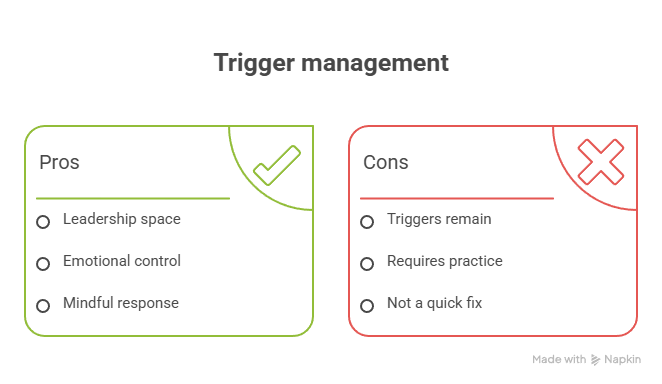
4. Triggers: Why You React Before You Think
Triggers are fast. Your body reacts before your logic shows up. The goal is not to eliminate triggers. The goal is to create a bigger gap between stimulus and response.
Think stimulus → gap → response. That gap is where leadership lives.
Try this: When you feel the first body cue (tight jaw, tight chest, racing thoughts), take three slow exhales before you respond.
5. The Anger Spectrum (Passive → Explosive)
Anger is not one thing. It ranges from passive (silent resentment, sarcasm, withdrawal) to explosive (yelling, threats, intimidation). A lot of men avoid the explosive end but ignore the passive end. Both create damage.
A useful tool is a simple 0 to 10 anger gauge. Most mistakes happen in the middle, when you are edgy but still pretending you are fine.
Try this: When anger rises, rate it 0 to 10. If you are at 4 to 6, contain first. Move your body first, speak second.
6. Shame VS Guilt (And How Each Drives Behavior)
Guilt is about behavior. “I did something wrong.” Shame is about identity. “I am wrong.” Guilt can push you toward repair. Shame pushes you toward hiding, defensiveness, blaming, or shutting down.
If you want emotional mastery, you must keep things in the behavior lane.
Try this: When shame shows up, switch to action. “I messed up. I can fix it and do better next time.”
7. Avoidance Patterns (Work, Numbing, Distraction)
Avoidance is any move that gives you short-term relief at a long-term cost. For men, the big three are work, numbing, and distraction. You bury yourself in tasks, you check out with comfort loops, or you stay busy to avoid feeling.
The pattern is simple: stress → avoid → relief → cost → more stress.
Try this: Pick one thing you’re avoiding and work on it for 10 minutes. Start today.
8. Self-Abandonment And Approval-Seeking Habits
Approval-seeking habits trade truth for peace. Approval-seeking trades truth for peace. When you keep doing it, you start abandoning yourself. You ignore your needs, bend your standards, and resentment builds quietly.
You ignore your needs, bend your standards, and build resentment quietly.
If you want leadership, you cannot lead from a place of needing everyone to like you.
Try this: Practice one small no. “That doesn’t work for me. Here’s what I can do.”
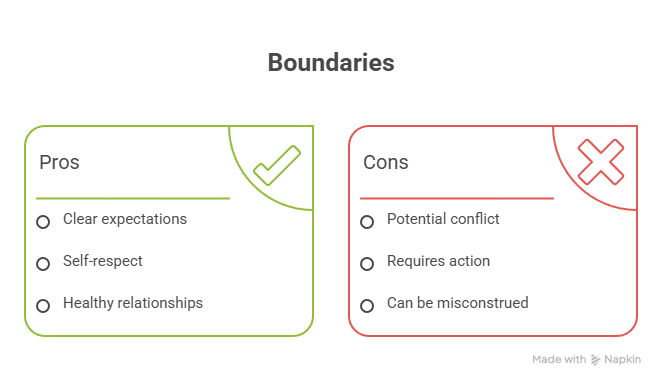
9. Boundaries: Internal VS External
A boundary is a standard you enforce with your actions. Not a speech. Not a threat.
Internal boundaries are what you will do. External boundaries are what you will do if someone crosses a line. If there is no action, it is not a boundary. It is a preference.
Try this: Write one boundary using this format. “If ___ happens, I will ___.”
10. Containment: Staying Grounded Under Pressure
Containment is the ability to hold pressure without spilling it onto others, and without collapsing. When you cannot contain your emotions, you leak it as tone, control, sharpness, withdrawal, or avoidance.
A practical tool is a pressure gauge. When you are in the 4 to 6 range, you are most likely to make a mistake. Contain first.
Try this: Feet planted. Slow exhale three times. Then speak one clean sentence. Do not add extras.
11. Owning Your Shadow (Without Self-Attack)
Your shadow is what you do not like to admit is in you. Control. Jealousy. Passive aggression. Need for praise. Defensiveness. It does not disappear when denied. It leaks.
Owning your shadow means you see it, take responsibility for it, and choose better. It does not mean you attack yourself.
Try this: Use this line when you catch yourself. “Yep, that was my shadow. I’m correcting it now.”
12. Integrity As Alignment, Not Perfection
Integrity is not being perfect. It is the alignment between values, words, and actions. When you drift, you repair. People trust reliable men, not flawless men.
Try this: Run a 60-second check. What did I say I’d do? What did I do? What is the smallest repair I can do today?
13. Responsibility Without Self-Punishment
Responsibility is clean ownership plus clean repair. Self-punishment is an identity attack, plus rumination, plus performative penance that avoids the actual fix.
Use this simple loop: fact → own → repair → rep.
Try this: Say it out loud. “I missed that. My part is ___. Here’s the fix ___. Here’s the next rep ___.”
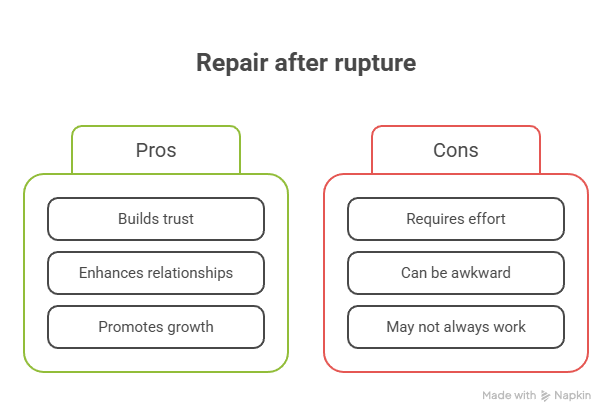
14. Repair After Rupture (With Spouse, Kids, Team)
Rupture happens. You get sharp. You withdraw. You overreact. Repair is what separates strong men from fragile men. Trust breaks more from no repair than from the mistake itself.
A clean repair has a rhythm: reset the heat, explain in one sentence, own your part, state the aim, ask what’s needed, commit to the next rep.
Try this: Repair one small moment today. Don’t wait for a bigger one.
15. Masculine Presence In Conversation
Presence is grounded attention plus clean direction. Not dominance. Not performance. Not trying to win.
A useful stack is body → attention → language. Ground your body. Give full attention. Speak simply.
Try this: Next discussion, consciously lower your tone and unclench your jaw. Say one sentence, ask one question, then stop talking.
16. Leadership From Grounded Authority
Grounded authority is calm firmness with follow-through. It is not yelling. It is not people-pleasing. Authority comes from reliability.
Think flywheel: standard → clarity → follow-through → trust. Trust creates more authority, which reduces chaos.
Try this: Use a three-line script. Here’s the standard. Here’s why. If it doesn’t happen, here’s what I will do.
17. Emotional Safety Without Becoming Soft
Emotional safety is predictability plus respect plus repair. Being soft, in the unhelpful sense, is avoiding standards to keep peace.
The target is high warmth and high standards. Safe and solid.
Try this: In conflict, use this sequence. Steady tone. Reflect what you heard in one sentence. State the boundary in one sentence.
18. Purpose, Direction, And Masculine Clarity
Clarity is knowing what matters and taking action even before you feel fully ready. Without clarity, men drift into reaction, numbing, or approval-seeking.
Use the North Star filter: purpose → three priorities → one next move.
Try this: Write one sentence. “I’m building ____.” Then choose your next move for today in 30 minutes or less.
19. Daily Practices For Emotional Regulation
Regulation is daily maintenance. If you do not bleed off stress on purpose, it leaks through tone, impatience, control, or withdrawal.
Think dashboard: body, breath, focus. Adjust one dial before you speak.
Try this: Set three anchors. Morning breath reset. Midday movement. Evening review (one win, one mistake, one next rep).
20. Your Personal Code As A Man (Integration)
A personal code is your written operating system. It saves you from having to figure out who you are in the heat of the moment.
Think code stack: compass (purpose and values), guardrails (boundaries), reps (daily practices), review (repair protocol).
Try this: Draft a one-page code. Include what you do when you make a mistake, the exact words you will use when you miss.
Quick Self-Audit
If you want to get traction fast, don’t try to do all 20 at once. Pick the area where you drift most:
- Do you get harsh when stressed?
- Do you get soft and avoid conflict?
- Do you check out and go numb?
- Do you struggle to repair after a mistake?
- Do you struggle to hold boundaries without heat?
Start there. Run reps until it becomes your new default.
Action Step
Pick three reps for the next seven days:
- One baseline rep (breath, body, regulation)
- One boundary rep (one clear line with follow-through)
- One repair rep (own it fast, fix it fast)
Keep it simple. Keep it consistent. That is how you build a man you trust.
FAQ: Boundaries, Emotional Mastery, and Leadership
How do I set firm boundaries without starting an argument?
Keep boundaries action-based, not speech-based. “If X happens, I will Y.” Then follow through calmly. Most arguments come from over-explaining or enforcing inconsistently.
What’s the fastest way to calm down when I’m triggered?
Start with your body. Slowly exhale longer than you inhale…do this for three rounds. Then buy the gap with one phrase: “Steady first, then speak.”
How can I repair things after losing my temper?
Own your part in one sentence, apologize without excuses, then state the next rep. The apology matters, but the changed behavior rebuilds trust.
How do I discover and stick to my purpose?
Do not chase the perfect answer. Write one sentence that says what you’re building in your life right now. Choose three priorities, then take one daily action that proves direction.
Which daily habit makes the biggest difference long-term?
The one you will keep. If you want a simple best bet: morning breath reset, midday movement, evening review. Consistency builds confidence.